Role UX Research and Strategy · Product Design
Industry Climate / Environmental Health
Timeline 3 Months

Creek Project

A research-led environmental platform architecture designed to align community behavior with accessible pollution tracking and actionable health guidelines.

Communities in the Niger Delta face persistent environmental degradation caused by oil-related activities, black soot exposure, and unsafe waste practices.

Creek was designed as a digital intervention to help residents monitor environmental conditions, access health-related safety information, increase awareness around pollution exposure, and connect with recycling opportunities.

The Challenge

Environmental pollution in the Niger Delta is not an abstract issue. For many residents, it directly affects:
• respiratory health
• water quality
• daily living conditions
• economic decisions

Research revealed a tension: People are aware of pollution risks, but economic dependency on environmentally harmful activities often outweighs long-term health concerns.

This created a difficult design challenge: How might digital tools increase awareness and healthier decision-making in high-risk environments?

Core Challenges
  • Black soot exposure
  • Illegal refining side effects
  • Weak environmental awareness systems
  • No accessible real-time air quality visibility
  • Limited connection to sustainable waste systems

Discovery

The project began with exploratory research into environmental behaviors and community realities in the Niger Delta.

The goal was to identify:
• major environmental pain points
• user motivations
• behavioral constraints
• feasible digital intervention opportunities

Methods Used
  • Qualitative interviews
  • Empathy mapping
  • Affinity mapping
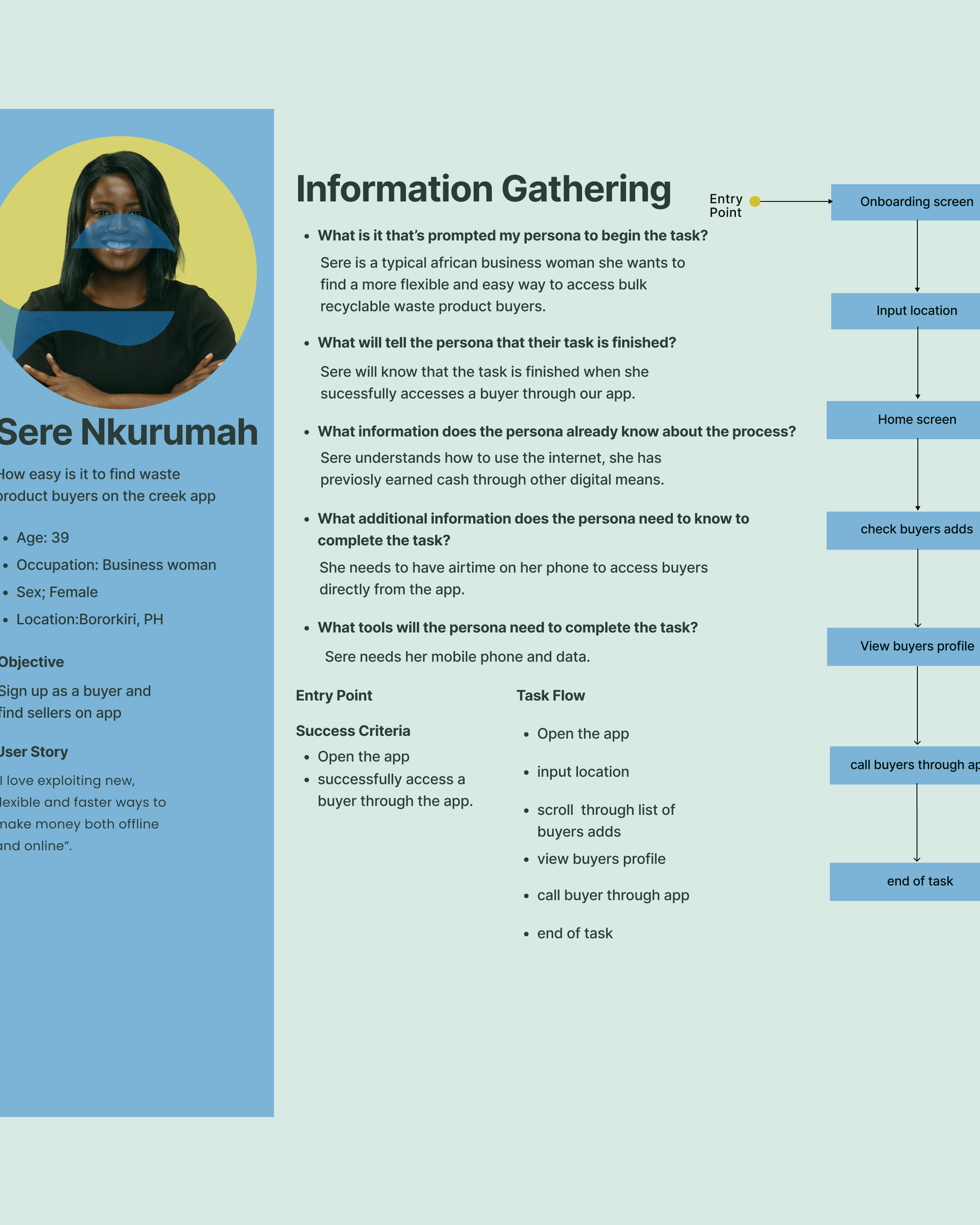
  • Task analysis
  • User personas
  • Usability testing
Research Goals

• Understand environmental challenges faced by residents
• Validate high-impact opportunity areas
• Create and test an MVP for possible deployment

Key Insights

01

Economic survival often overrides environmental caution.
Many participants acknowledged environmental risks but still engaged in harmful systems due to financial necessity. Short-term income frequently outweighs long-term environmental concerns.

02

Awareness exists, but action infrastructure is weak.
Users understand pollution is harmful but feel powerless to influence change. Many expressed: lack of reporting channels, lack of visibility tools, and low confidence in institutional response.

03

Health consequences are immediate and personal.
Participants reported coughing, respiratory discomfort, black soot exposure, and water contamination concerns. Pollution is experienced as a daily lived condition, not distant risk.

04

Waste recycling has economic relevance.
Plastic waste already circulates through informal economic systems. Users were open to monetizing recyclable waste through better buyer access.

Product Strategy

Creek was designed as a lightweight awareness and action platform.

The product centered on five practical utility layers.

Pillar 01

Real-Time Air Quality Monitoring

Users can instantly check air quality levels in their environment.

Pillar 02

Health Safety Guidance

Receive health tips and environmental safety recommendations.

Pillar 03

Pollution Awareness Sharing

Users can share local air quality data to social platforms to increase awareness.

Pillar 04

Health Status Checks

Basic health guidance and environmental health support flows.

Pillar 05

Recycling Network Access

Users can locate recyclable waste buyers directly through the platform.

Usability Testing

Prototype testing surfaced several interaction issues.

Before Testing (Users struggled with):
• unclear CTAs
• weak visual hierarchy
• difficulty interpreting air quality information
• poor buyer profile readability

After Iteration (Improved):
• CTA visibility
• layout spacing
• information labels
• content comprehension
This strengthened usability and navigation clarity.

Product Experience

Visualizing the environmental architecture, from affinity mapping to high-fidelity interactions.
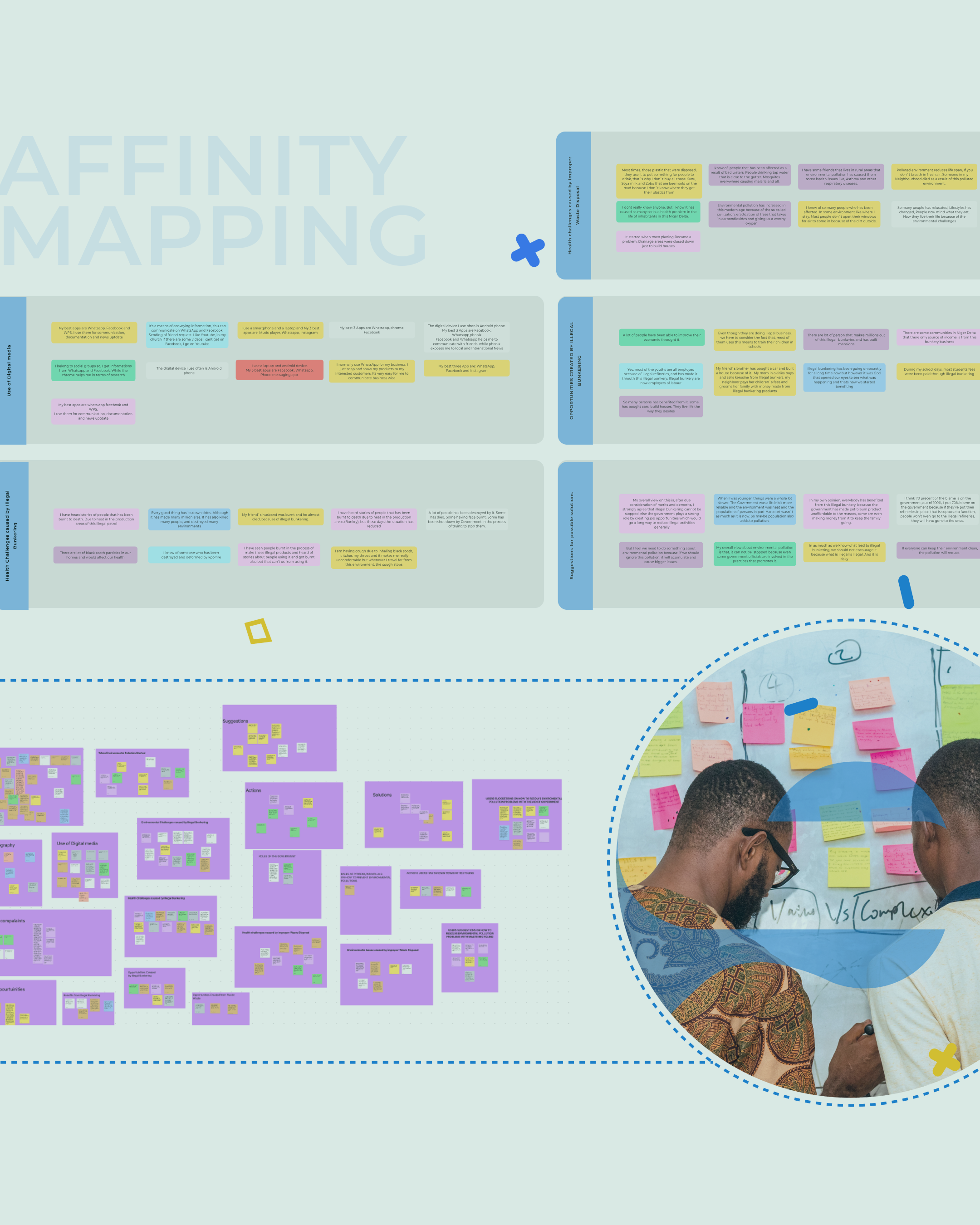
Creek Project Affinity Mapping
01 Affinity Mapping
Creek Project Task Flow
02 Task Flow Architecture
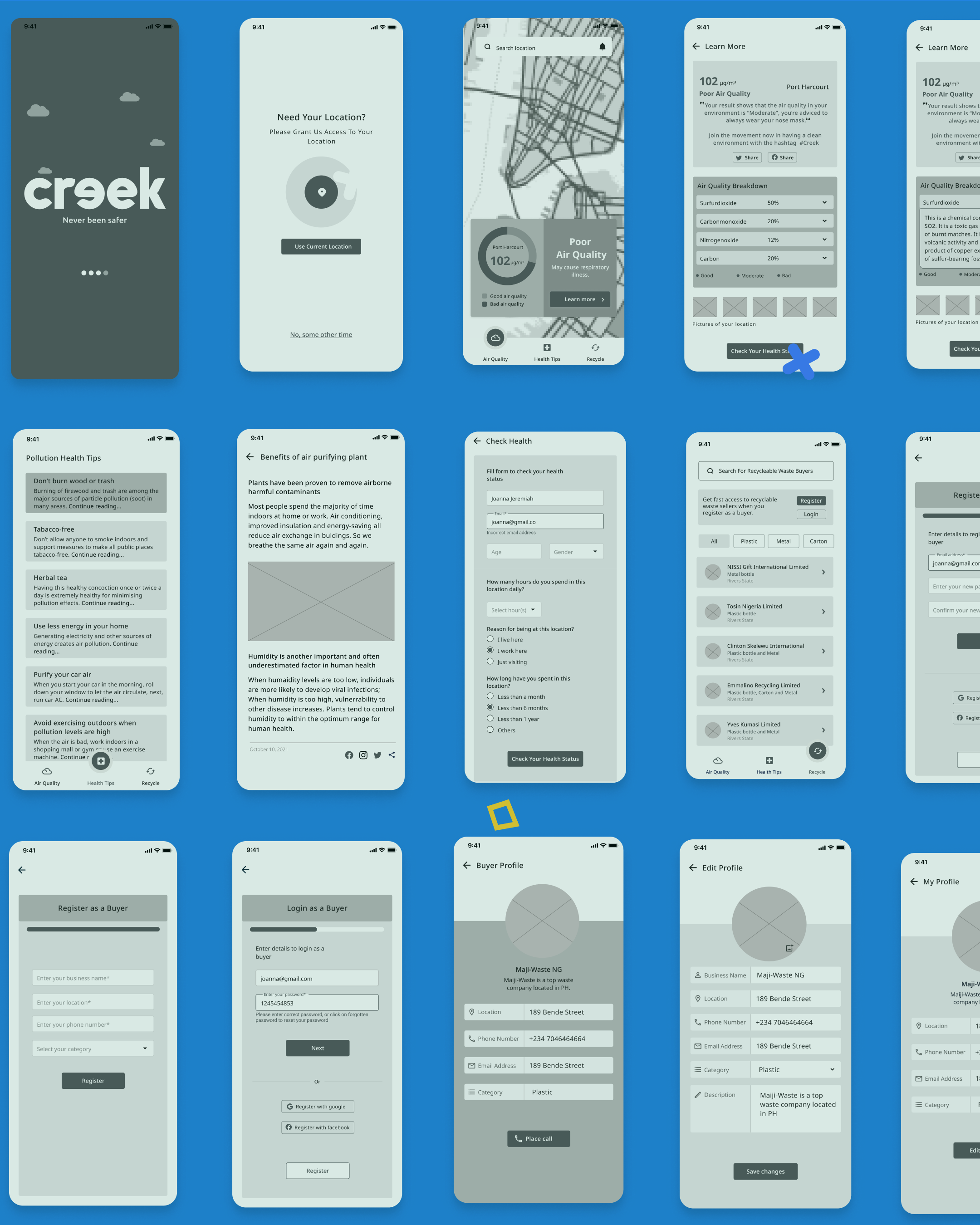
Creek Project Wireframes
03 Initial Wireframes
Creek Project High-Fidelity Design
04 High-Fidelity Interface

Expected Impact

Improved pollution awareness

Better access to environmental information

Health-conscious decision support

Improved access to recycling opportunities

Key Learnings

Designing for environmental behavior requires understanding human incentives first. Awareness alone is rarely enough.

Products in high-risk communities must align with:
• economic realities
• daily habits
• trust behavior
• accessibility constraints

Behavior-aware design creates stronger adoption pathways.

Explore More Work

Let's build
something
valuable.

Have a project in mind? I bring strategic research and service design into your next initiative. Let's have a conversation about what's possible.

Start a Conversation